Variable Speed Drives vs Soft Starters: Which Solution Is Right for Your Application?
Electric motors play a critical role in modern commercial and industrial operations, powering everything from pumps and conveyors to fans, compressors and manufacturing equipment.
When selecting a motor control solution, one of the most common questions is whether to use a Variable Speed Drive (VSD) or a Soft Starter.
While both technologies help improve motor performance and reduce stress during startup, they are designed for different applications and deliver different benefits.
What is a Variable Speed Drive?
A Variable Speed Drive (VSD), also known as a Variable Frequency Drive (VFD), controls the speed and torque of an electric motor by adjusting the frequency and voltage supplied to the motor.
Unlike traditional motor starters, a VSD allows the motor to operate at the exact speed required by the application.
Variable Speed Drives are commonly used in:
- Pumping systems
- Ventilation and HVAC applications
- Conveyors
- Compressors
- Irrigation systems
- Manufacturing equipment
The ability to continuously adjust motor speed makes VSDs ideal for applications where process demands change throughout operation.
What is a Soft Starter?
A Soft Starter is designed to reduce the electrical and mechanical stress associated with starting an electric motor.
Rather than applying full voltage instantly, a soft starter gradually increases the voltage supplied to the motor, resulting in a smoother startup and reduced inrush current.
Soft starters are typically used in applications where the motor operates at a constant speed once started.
Common applications include:
- Compressors
- Large pumps
- Fixed-speed conveyors
- Crushers
- Fans operating at constant speed
Unlike a VSD, a soft starter does not provide ongoing speed control once the motor reaches full operating speed.
Understanding the Key Differences
| Feature | Variable Speed Drive | Soft Starter |
|---|
| Motor Speed Control | Yes | No |
| Energy Savings | High | Limited |
| Smooth Motor Starting | Yes | Yes |
| Process Control | Excellent | Basic |
| Operational Flexibility | High | Moderate |
| Variable Load Applications | Ideal | Limited |
The biggest difference is simple:
A Soft Starter helps a motor start more smoothly.
A Variable Speed Drive controls the motor throughout its entire operation.
When Should You Use a Variable Speed Drive?
A Variable Speed Drive is generally the preferred solution when:
- Motor speed needs to change during operation
- Energy efficiency is a priority
- Process control is important
- System flexibility is required
- Operating costs need to be reduced
Applications such as pumps, fans and HVAC systems can often achieve significant energy savings by matching motor speed to actual demand.
When Should You Use a Soft Starter?
A Soft Starter is often the right choice when:
- The motor runs at full speed after startup
- Speed control is not required
- The primary goal is reducing startup current
- Budget is a key consideration
- Mechanical stress during startup needs to be minimised
In these applications, a soft starter can provide an effective and economical solution.
Why Energy Efficiency Matters
One of the key advantages of Variable Speed Drives is their ability to reduce energy consumption.
In applications such as pumps and fans, motors often operate below maximum demand for extended periods. By reducing motor speed to match system requirements, a VSD can significantly lower electricity consumption while maintaining performance.
This can result in reduced operating costs, improved system efficiency and a faster return on investment.
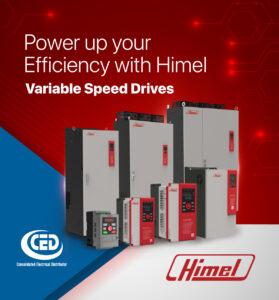
Himel Variable Speed Drives
Himel Variable Speed Drives provide a practical and reliable solution for modern motor control applications.
Designed for ease of installation and dependable operation, the Himel drive range supports a wide variety of commercial and industrial applications where efficiency, performance and simplicity are important.
Whether controlling pumps, fans, conveyors or process equipment, Himel drives help operators achieve improved motor performance while reducing energy consumption.
Partner with CED
CED supplies Himel Variable Speed Drives and motor control solutions backed by technical support and product expertise.
If you’re evaluating motor control options for your next project, our team can assist with selecting the right solution for your application.
Contact CED to learn more about the Himel Variable Speed Drive range and discover the benefits of smarter motor control.